Antique 1800s Cast Iron Spider Skillet Gate Mark 4 Feet Single Spout 10.75
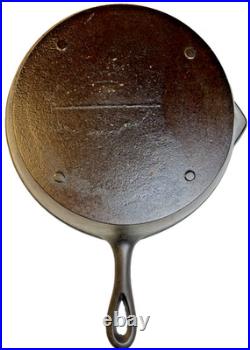
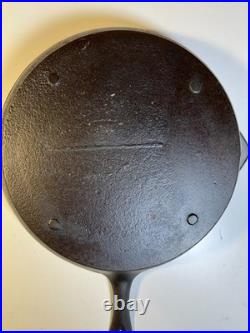
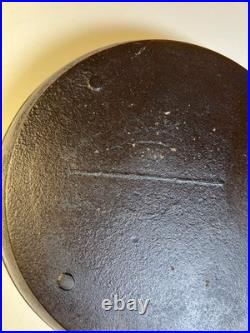
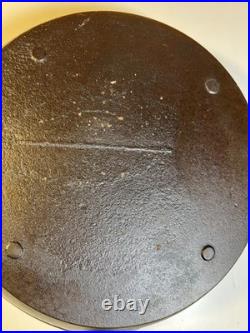
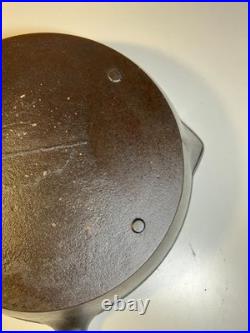
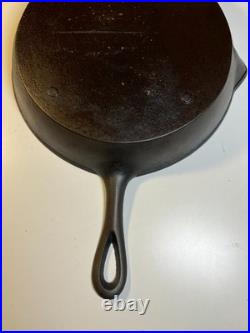
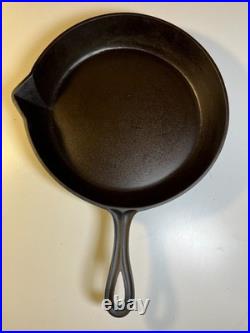
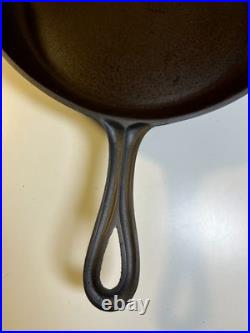
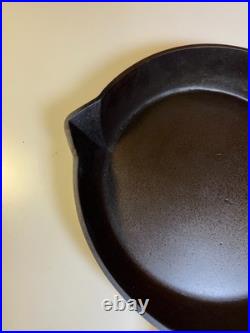
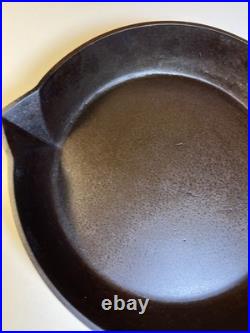
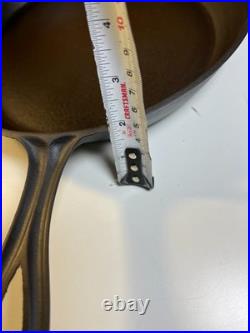
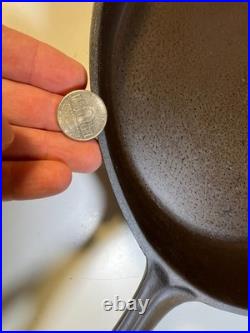

Antique 19th-Century Gate-Marked Cast Iron Spider Skillet. A wonderfully primitive piece of early American cookware, distinguished by its prominent bottom gate mark, four small raised feet, single pouring spout, unusually thick construction, and handsome open teardrop handle. The underside retains a bold linear gate mark-the scar left where molten iron entered the sand mold during casting.
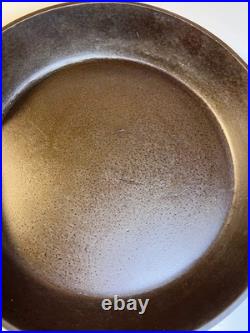
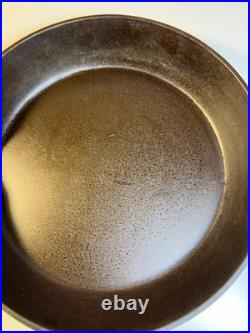
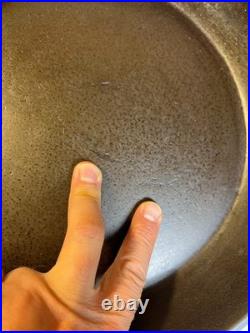
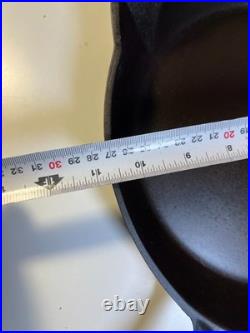
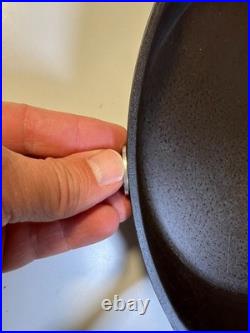
Gate-marked cookware was produced by numerous regional foundries, and unmarked examples such as this one are generally impossible to assign confidently to a particular maker. The four short "nubby" feet elevate the skillet slightly above the cooking surface. This was a transitional design descended from earlier hearth cookware, allowing hot air and heat to circulate beneath the pan while still being short enough for use on an iron cookstove. The prominent single spout and decorative open handle give it far more personality than a standard later skillet. The cast iron is exceptionally substantial. Its sidewalls measure approximately twice the thickness of a U. Nickel, giving the skillet a heavy, rugged presence. The underside also shows wonderfully irregular sand-cast texture and four clearly defined feet. Approximately 10.75 inches wide across the skillet. Thick walls-approximately twice the thickness of a U. Cleaned and restored with a dark, attractive seasoned finish. The cooking surface displays scattered fine pitting and normal surface marks consistent with considerable age and use.There are two crescent-shaped stress/casting shunts in the cooking surface, clearly shown in the photographs. These appear to be old casting or thermal-stress irregularities rather than modern damage, but they are disclosed carefully and should be reviewed in the close-up photographs. The skillet has a noticeable wobble on a perfectly flat surface; approximately two business cards placed beneath the appropriate feet remedy the movement. This matters mainly for modern smooth cooktops and is far less consequential for display or use on grates. No maker's name or pattern number is visible.
Please examine all photographs, as they form an important part of the description. A striking survivor from the era when cookware was individually sand-cast-primitive, extremely solid, and loaded with the character collectors want.