Antique Cast Iron Griddle Gate Marked Sideways No. 8 c 1840-1855 Early American
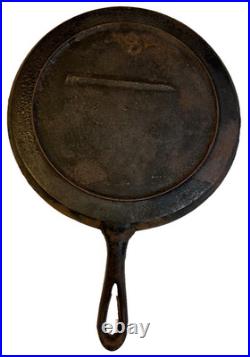
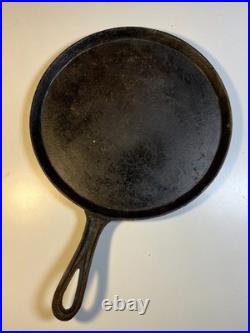
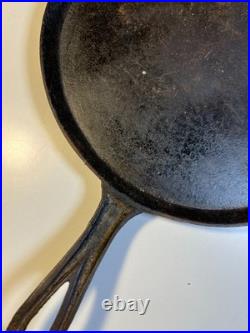
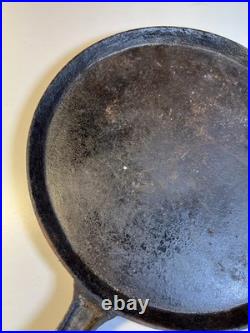
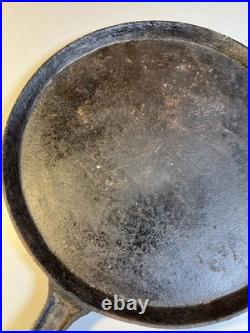
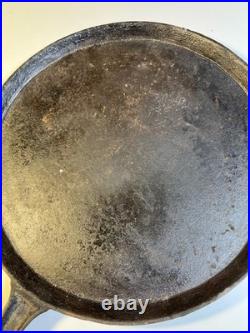
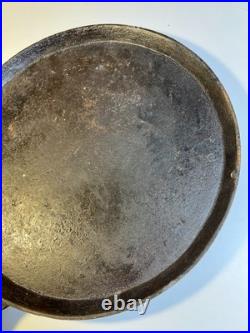


This is not just an "old" cast iron griddle-it's iron from before factories learned to hide their fingerprints. Every clue on this piece points to small-foundry, pre-industrial American manufacture, when cookware was poured by hand, finished by eye, and judged by function rather than branding. This is the kind of iron that fed families before the Civil War, not something dressed up to look old later.
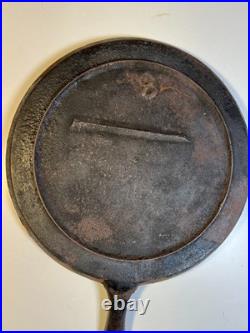
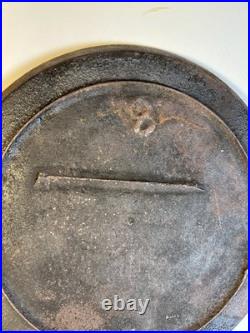
Let's walk through the evidence, out loud. Definitively pre-1870, almost always pre-1860. Gate mark is unusually thick? Early pour practice, conservative iron flow, small foundry habits Later foundries narrowed gates to reduce finishing labor; early ones over-poured to avoid miscasts. Sideways raised "8" size mark?
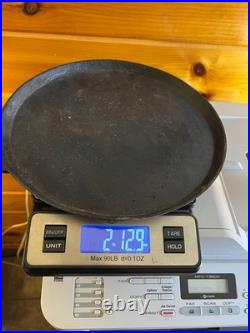
Not a mistake, but a hallmark of early sand-mold work The numeral was a loose insert placed by hand; orientation simply didn't matter yet. Typical before branding and factory identity became important. Thin casting at only 2.12 lb? Skilled early iron work, not later heavy mass production. More common on early New England / Mid-Atlantic iron before cost-cutting simplified designs.
Put together, these details don't just suggest an early date-they stack toward it. How it was made - this is where the gate tells the truth.
This griddle was sand-cast in an open mold. A wooden pattern was pressed into damp sand. Molten iron was poured through a wide gate channel (later broken off, leaving the thick scar).
The casting cooled and was knocked free. Edges and surfaces were hand-dressed, not machined.
The handle opening was refined while the iron was still workable. Seasoning came naturally-fat, heat, repetition. That faint unevenness you noticed-the one corrected with less than a business card on glass? That's 19th-century tolerance, from a time before precision leveling mattered more than getting breakfast on the table.
Regional attribution - as close as responsible gets. We can't name a foundry (normal for this era), but we. These traits align best with New England or the Upper Mid-Atlantic -most plausibly Massachusetts, Connecticut, Hudson Valley NY, or eastern Pennsylvania. Southern iron of the period tends to be heavier and plainer; frontier Midwest iron is usually chunkier and cruder. This piece shows skill and restraint, not brute mass.
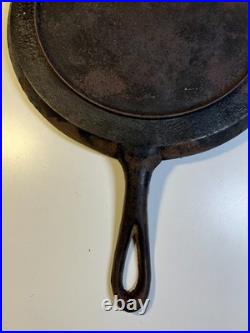
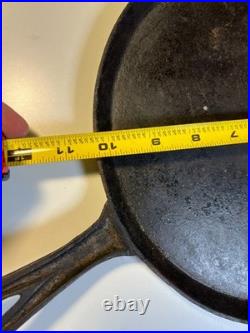
Markings: Raised sideways "8" ; exceptionally thick gate mark. Surface: Honest, cosmetic, oxidation, stable, no cracks. Flatness: Excellent for age; only the faintest rock on glass. Handle: Elegant pierced form-strong, balanced, visually refined. This is honest survivor condition -not cleaned, not cosmetically erased.
Set the scene - a morning when this mattered. Bacon fat hits iron with that sound that means food is coming. Cornmeal batter follows-johnnycakes or thin flapjacks-spread across a griddle like this one. Just experience, heat, and muscle memory. This pan didn't make brunch-it made breakfast before daylight, before work, before school, before the day could even start. Life during the period (what this iron lived through).Medicine: Bloodletting still practiced; ether anesthesia is new and astonishing. Germ theory isn't yet mainstream.
Technology: Telegraph wires are shrinking the country; railroads are expanding fast; electricity is still theoretical. Politics: America is tense-slavery, expansion, sectionalism.
This griddle lived through the buildup to the Civil War. Daily life: You owned fewer things. Gate-marked griddles are scarcer than skillets, and examples with refined handles, thin casting, and early mold quirks are scarcer still.Many were cracked, warped, or discarded once newer stoves and cookware appeared. Survival alone is notable; survival with these features is collector-grade. The sideways "8" and exceptionally thick gate mark are not flaws-they're manufacturing fingerprints from a time before efficiency polished them away.
These are exactly the inefficiencies later industry worked hard to eliminate, and exactly why this piece can't be convincingly replicated today.