Antique ERIE #7 Cast Iron Skillet c 1880-1895 Thin Wall Star Mark Griswold Era
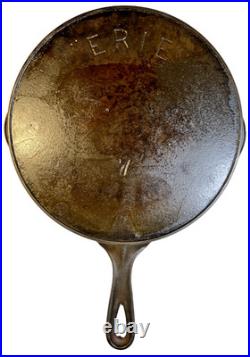
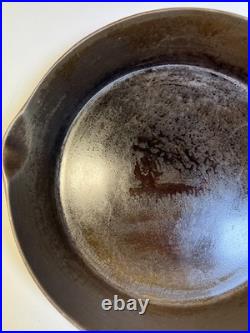
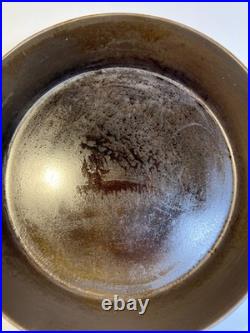
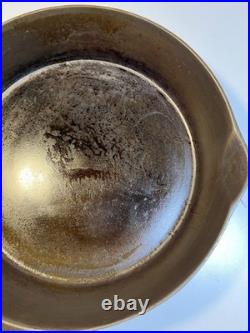
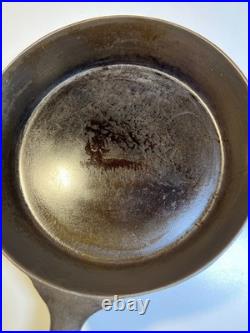
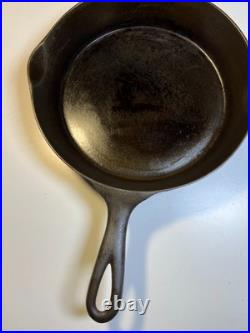
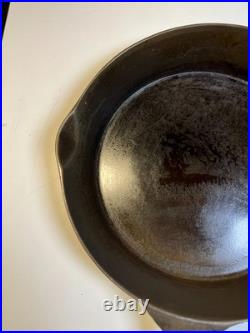
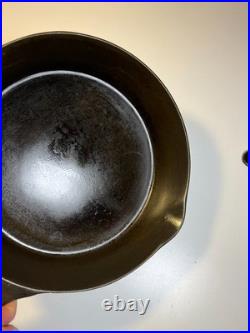
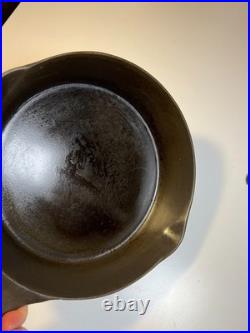
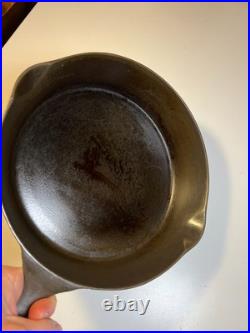
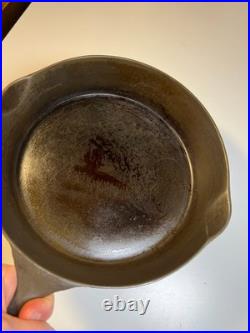
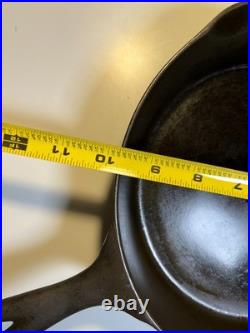

Alright-this one deserves the velvet rope treatment. This is not a fuzzy "late 19th century" guess.
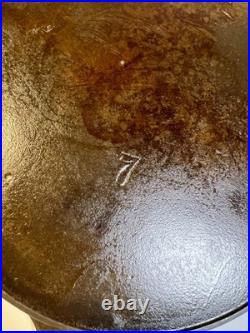
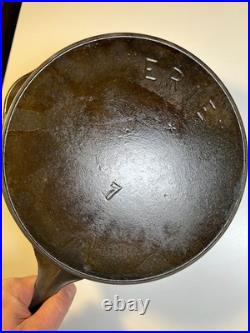
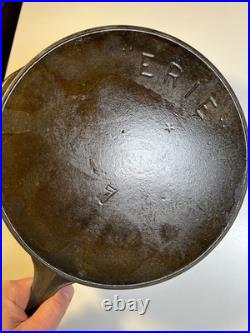
Line up tightly, and they all agree with one another. Why This #7 ERIE Is the Real Thing (and Early). That sharply angled, almost calligraphic 7 is a classic pre-1890 Erie size mark. Later ERIE pans-especially post-1895-tend toward more upright, standardized numerals as pattern-making became more mechanized.
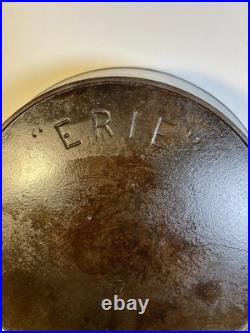
This one still has the hand-cut personality. The shallow arc of ERIE across the top quadrant is textbook early Griswold Erie Ware, before the company standardized logo placement and depth.
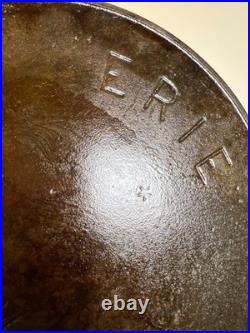
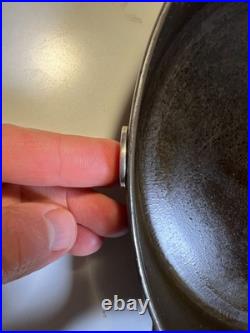
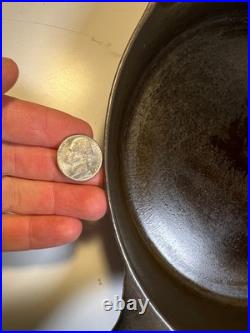
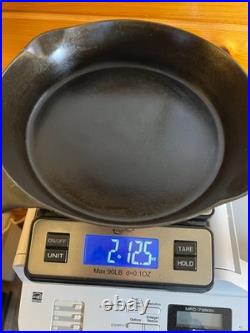
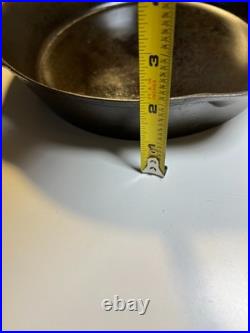
The letters are crisp but not overly uniform-exactly what you expect from high-skill sand casting rather than later mass-production molds. That small star is not decorative fluff. It's a foundry pattern or quality-control mark, seen on select early Erie Ware pieces. These marks disappear as Griswold moves into higher-volume output. You mostly see them in the 1880s-quiet little signatures from the floor of the foundry. The Weight & Wall Thickness. At 2.12 lbs, with sidewalls as thin as a U. Nickel, this pan sits in the sweet spot of Erie engineering. Heavy enough to hold heat evenly.Light enough to maneuver all day over open flame. Later pans get thicker, heavier, and duller by comparison. This one was made when skill still mattered more than throughput. "Very finely cast" is almost underselling it. The surface texture is smooth, tight, and controlled-no sand chatter, no slop, no excess iron.
This is what happens when experienced molders are still shaping molds by hand and eye. What Life Looked Like When This Pan Was Made. When this skillet first hit a stove, America was still figuring itself out. Cooking: Wood and coal stoves ruled the kitchen.
Temperature control meant instinct, not dials. A pan like this wasn't a utensil-it was a survival tool. Cornbread, salt pork, flapjacks, venison, fried apples. Medicine: Germ theory was still gaining acceptance.
Aspirin didn't exist yet. Doctors prescribed rest, tonics, and luck. Cast iron cookware was believed-correctly, as it turns out-to improve health by adding trace iron to food. Technology: Electric lights were rare curiosities. Telephones existed, but most people would never touch one.
Railroads stitched the country together, and Erie, Pennsylvania sat right on that industrial heartbeat. Politics: This was the Gilded Age-railroad barons, steel empires, labor strikes, and a nation learning (the hard way) what industrial power really meant. And in the middle of all that noise, this pan was quietly doing its job, day after day. Condition (This Is Where It Gets Serious).
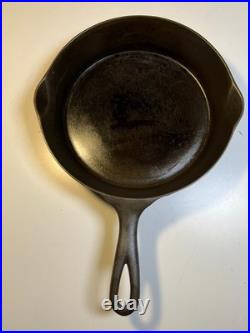
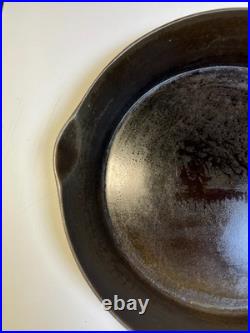
Dead flat - no wobble, no excuses. Well seasoned, with honest, deep patina.
Interior shows the kind of wear you. Evidence of decades of proper use, not abuse. This is not a rescued wreck.
This is a survivor in peak working condition. Why This Is "One of the Best Ever Made". Early ERIE #7s are already desirable.
An early ERIE #7 that is this thin, this flat, this clean, and this well-cast is something else entirely. This is the pan modern makers still chase and never quite catch. If someone strapped this to a chuck wagon in 1885, no one would've blinked.If someone cooks with it today, the food will still be better for it. The Continuous Heat Ring (Why It Matters). Your pan has a true, fully continuous heat ring -not broken, not segmented, not "mostly there, " but an unbroken iron circle tied cleanly into the base. That detail alone tells us. What a Continuous Heat Ring Tells Us.
Continuous heat rings were engineered for round burner openings on. The ring locks the pan into place so it doesn't wander over uneven flame.
This design predates modern flat-top thinking. By the 1890s-1900s, manufacturers begin. Your pan comes from the era when stoves dictated design-not the other way around. Earlier Than Broken or Interrupted Rings. Later ERIE and early Griswold transitional pans often show. Or rings with intentional gaps. Those changes were cost-cutting and production-speed decisions. A fully continuous ring means. Foundries only did this when labor was cheap and craftsmanship still ruled. That puts us comfortably pre-1895, and realistically 1880s. Why It's Dead Flat (This Is the Quiet Miracle). Here's the part collectors really appreciate. Continuous heat rings tend to warp more easily over time because. The ring cools at a different rate than the cooking surface. Repeated heating stresses the joint. Slow, controlled cooling at the foundry.That's not luck-that's quality. Paired with Thin Walls = Peak Erie Engineering. This is the killer combo.
Light overall weight (2.12 lbs for a #7). Those traits almost never coexist in later production. This is when Erie was chasing. More forgiving of sloppy casting. This one was made when iron was still treated like a precision material.
Dating Refinement Using the Heat Ring. That's about as tight as cast iron dating ever gets without a ledger entry from the foundry. Why Collectors Care (Even If They Don't Say It Out Loud). Visually anchors the pan as "old" instantly. Signals early Erie lineage without needing a logo. And when it's this flat, it becomes borderline mythical. This one is a benchmark.